
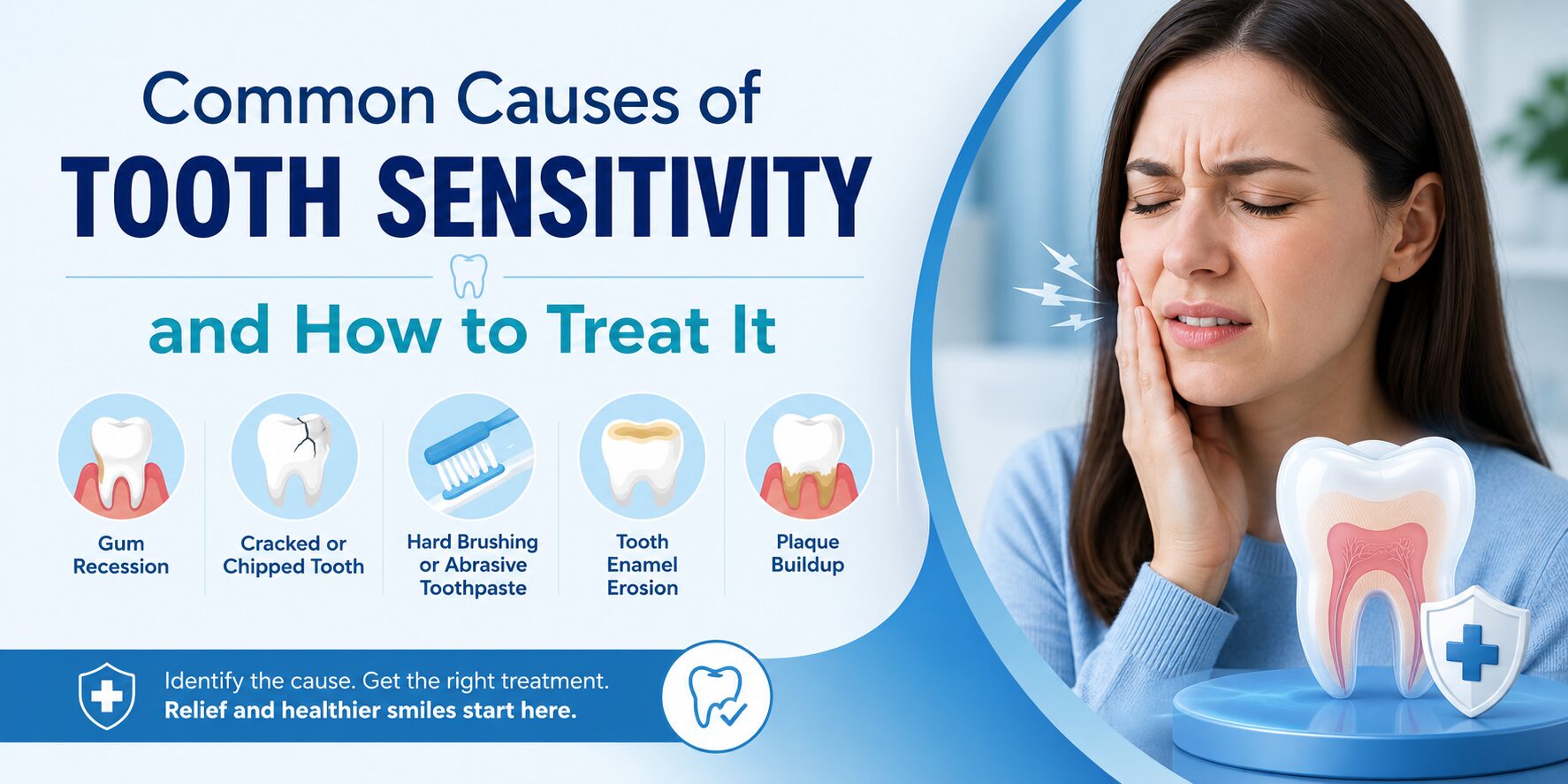
Common Causes of Tooth Sensitivity and How to Treat It
Expert Advice from Dr. Ankush R. Agrawal at Dentsee Dental Clinic
Have you ever experienced a sudden sharp pain while drinking a hot cup of coffee or enjoying ice cream? If yes, you may be suffering from tooth sensitivity, a common dental problem that affects millions of people worldwide. While occasional sensitivity may seem harmless, persistent discomfort can indicate an underlying dental issue that requires professional attention.
At Dentsee Dental Clinic, Dr. Ankush R. Agrawal helps patients identify the root cause of tooth sensitivity and provides effective treatments to restore comfort and oral health.
What Is Tooth Sensitivity?
Tooth sensitivity, also known as dentin hypersensitivity, occurs when the protective layers of the teeth become worn down or damaged, exposing the dentin underneath. Dentin contains tiny tubules that connect to the tooth’s nerve endings. When exposed to hot, cold, sweet, acidic, or even cold air, these nerve endings become stimulated, causing pain or discomfort.
Common Causes of Tooth Sensitivity
- Enamel Erosion
Tooth enamel is the hard outer layer that protects your teeth. Consuming acidic foods and beverages such as soft drinks, citrus fruits, and energy drinks can gradually wear away enamel, leaving teeth vulnerable to sensitivity.
Common culprits include:
- Carbonated drinks
- Citrus fruits
- Sports drinks
- Vinegar-based foods
- Gum Recession
Healthy gums cover and protect the roots of your teeth. However, gum recession caused by aging, aggressive brushing, or gum disease can expose the tooth roots, leading to increased sensitivity.
- Tooth Decay and Cavities
Cavities create openings in the tooth structure, exposing sensitive inner layers. As decay progresses, sensitivity may become more noticeable, especially when eating sweets or consuming hot and cold foods.
- Worn Dental Fillings
Old or damaged fillings may crack, loosen, or wear out over time. This can expose vulnerable areas of the tooth and allow temperature changes to affect the nerves.
- Teeth Grinding (Bruxism)
Many people unconsciously grind or clench their teeth during sleep. This habit gradually wears down enamel, making teeth more sensitive and prone to damage.
- Aggressive Brushing
Brushing too hard or using a hard-bristled toothbrush can erode enamel and cause gum recession. Over time, this increases the likelihood of tooth sensitivity.
- Recent Dental Procedures
Some patients experience temporary sensitivity after dental treatments such as:
- Teeth whitening
- Dental fillings
- Crowns
- Root planing and scaling
This sensitivity usually subsides within a few days or weeks.
- Cracked or Chipped Teeth
A cracked tooth can expose the inner dentin and pulp, leading to pain when biting or consuming hot and cold foods.
- Gum Disease
Periodontal disease can damage gum tissue and expose tooth roots. If left untreated, it can result in severe sensitivity and tooth loss.
Signs and Symptoms of Tooth Sensitivity
You may have tooth sensitivity if you experience:
- Sharp pain when consuming hot or cold foods
- Discomfort while eating sweets
- Pain when drinking cold beverages
- Sensitivity during brushing or flossing
- Sudden tooth pain when breathing cold air
If symptoms persist, it is important to consult a dental professional for proper diagnosis.
How to Treat Tooth Sensitivity
Use a Desensitizing Toothpaste
Specially formulated desensitizing toothpaste helps block pain signals from reaching the tooth nerves. Regular use can significantly reduce sensitivity over time.
Switch to a Soft-Bristled Toothbrush
Using a soft toothbrush and gentle brushing technique can prevent further enamel wear and gum recession.
Practice Proper Oral Hygiene
Maintaining good oral hygiene helps prevent cavities and gum disease, both of which contribute to sensitivity.
Daily routine should include:
- Brushing twice daily
- Flossing once a day
- Using fluoride toothpaste
- Regular dental checkups
Fluoride Treatments
Professional fluoride applications strengthen enamel and reduce sensitivity by protecting exposed tooth surfaces.
Dental Bonding
For exposed roots or worn enamel, dentists may apply bonding material to cover sensitive areas and reduce discomfort.
Treat Gum Disease
If gum recession is caused by periodontal disease, professional gum treatment can help restore oral health and reduce sensitivity.
Wear a Night Guard
Patients who grind their teeth can benefit from a custom-made night guard that protects enamel and prevents further damage.
Restore Damaged Teeth
Cracked teeth, cavities, or damaged fillings may require:
- Dental fillings
- Crowns
- Inlays or onlays
- Root canal treatment in severe cases
Prevention Tips for Tooth Sensitivity
To keep your teeth healthy and sensitivity-free:
- Limit acidic foods and drinks
- Avoid brushing immediately after consuming acidic beverages
- Use fluoride toothpaste
- Drink plenty of water
- Wear a mouthguard if you grind your teeth
- Visit your dentist every six months
- Avoid excessive teeth whitening treatments
When Should You See a Dentist?
Occasional sensitivity may not be a cause for concern, but persistent or worsening pain should never be ignored. Sensitivity can be a sign of underlying issues such as cavities, gum disease, or tooth fractures that require professional care.
If you are experiencing ongoing tooth sensitivity, schedule a consultation with Dr. Ankush R. Agrawal at Dentsee Dental Clinic. Early diagnosis and treatment can prevent complications and help preserve your natural teeth.
Conclusion
Tooth sensitivity is a common problem, but it should not interfere with your daily life. Understanding the causes and seeking timely treatment can help you enjoy your favorite foods and beverages without discomfort. Whether your sensitivity is due to enamel erosion, gum recession, cavities, or teeth grinding, effective solutions are available.
At Dentsee Dental Clinic, Dr. Ankush R. Agrawal provides comprehensive dental care tailored to each patient’s needs. If you are struggling with sensitive teeth, book an appointment today and take the first step toward a healthier, pain-free smile.
Frequently Asked Questions (FAQs)
- Is tooth sensitivity permanent?
No. In many cases, tooth sensitivity can be treated successfully once the underlying cause is identified.
- Can sensitive teeth heal on their own?
Mild sensitivity may improve with proper oral care, but persistent symptoms often require professional treatment.
- Which toothpaste is best for sensitive teeth?
Desensitizing toothpaste containing potassium nitrate or stannous fluoride is commonly recommended.
- Can cavities cause tooth sensitivity?
Yes. Tooth decay can expose sensitive inner layers of the tooth, leading to discomfort and pain.
- How quickly can treatment reduce sensitivity?
Depending on the cause, relief may be experienced within a few days to several weeks after treatment begins.