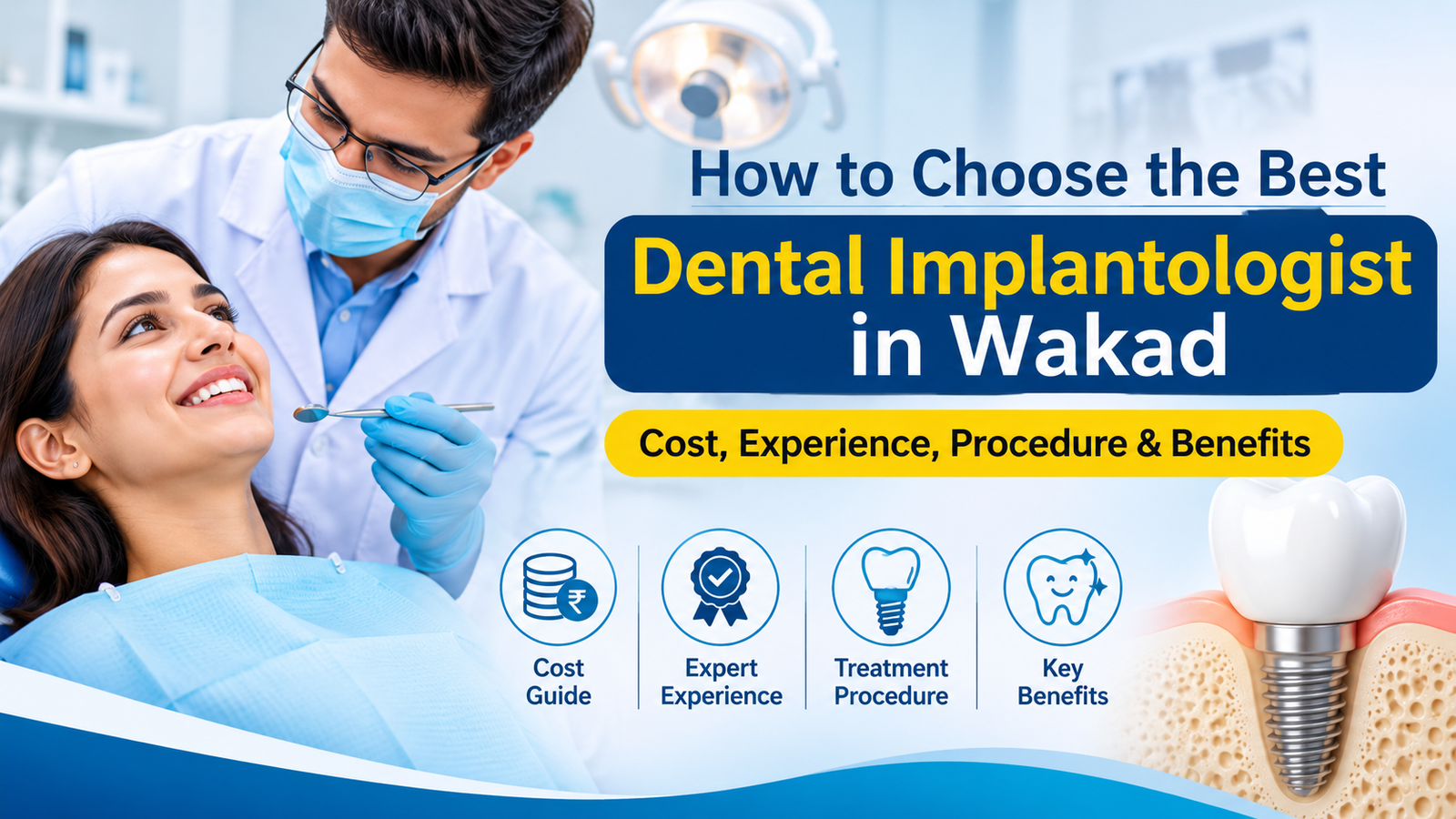
How to Choose the Best Dental Implantologist in Wakad: Cost, Experience, Procedure & Benefits
Introduction
Missing teeth can affect more than just your smile. They can make chewing difficult, impact speech, reduce confidence, and gradually affect your overall oral health. Dental implants are one of the most effective modern solutions for replacing missing teeth. They provide a stable, natural-looking replacement that can function much like natural teeth.
However, choosing the right specialist is an important step towards successful dental implant treatment. If you are searching for the best Dental Implantologist in Wakad, it is essential to consider the dentist’s qualifications, clinical experience, treatment approach, technology, hygiene standards, and patient care.
A qualified dental implantologist can assess your oral health, recommend suitable implant options, and create a personalised treatment plan based on your dental requirements.
In this blog, we will explore how to choose the right dental implantologist, understand the treatment procedure, learn about dental implant costs, and discover the benefits of dental implants.
What Is a Dental Implantologist?
A dental implantologist is a dental professional with specialised training and clinical experience in planning and performing dental implant procedures. Dental implants are used to replace missing tooth roots and support artificial teeth such as crowns, bridges, or dentures.
A dental implant typically consists of three main components:
- Implant Fixture: A small, screw-shaped post, usually made of titanium or another biocompatible material, placed into the jawbone.
- Abutment: A connector that attaches the artificial tooth to the implant.
- Dental Crown: The visible tooth replacement designed to look and function like a natural tooth.
If you have one or more missing teeth, consulting an experienced Dental Implantologist in Wakad can help you understand whether implant treatment is suitable for your oral health condition.
Why Is Choosing the Right Dental Implantologist Important?
Dental implant treatment requires careful diagnosis, surgical planning, precise placement, and proper follow-up care. The experience and treatment approach of your dental professional can significantly influence your treatment experience and long-term results.
Here are some reasons why choosing the right specialist matters:
- Accurate Diagnosis: A detailed examination helps identify bone quality, gum health, and other factors affecting implant treatment.
- Personalised Treatment Planning: Every patient has different dental requirements. A suitable treatment plan addresses individual needs.
- Proper Implant Placement: Careful surgical planning helps achieve appropriate implant positioning.
- Better Patient Comfort: Clear communication and proper care can make the treatment experience more comfortable.
- Long-Term Maintenance: Regular monitoring and professional guidance help maintain implant health.
Therefore, take time to research and consult a qualified Dental Implant Surgeon in Wakad before making your decision.
10 Important Factors to Consider When Choosing the Best Dental Implantologist in Wakad
- Check Qualifications and Specialised Training
The first step is to understand the dentist’s educational background, professional qualifications, and additional training in implant dentistry.
Dental implant procedures involve surgical skills and an understanding of oral anatomy, jawbone structure, and prosthetic restoration.
Ask about:
- Dental qualifications and certifications.
- Additional implant dentistry training.
- Clinical experience in implant procedures.
- Experience handling different implant cases.
Choosing a suitably trained professional can help ensure that your treatment is planned according to accepted clinical practices.
- Evaluate Clinical Experience
Experience is another important factor when selecting a dental implant specialist. Implant cases can vary depending on the number of missing teeth, bone availability, gum health, and overall medical history.
Ask your dentist about their experience with:
- Single-tooth dental implants.
- Multiple dental implants.
- Full-mouth dental rehabilitation.
- Bone grafting procedures, when required.
- Implant-supported bridges and dentures.
An experienced Dental Implantologist in Wakad should be able to explain the available treatment options and their suitability for your condition.
- Look for Advanced Diagnostic Technology
Modern diagnostic technology plays an important role in dental implant planning.
Depending on your clinical requirements, your dentist may recommend:
- Digital dental X-rays.
- CBCT (Cone Beam Computed Tomography) scans.
- Digital impressions.
- Computer-assisted implant planning.
CBCT imaging provides a three-dimensional view of the jawbone, nerves, and surrounding structures. It can help the dentist assess bone volume and plan implant placement more accurately.
Not every patient requires every technology. Your dentist should recommend diagnostic procedures based on your individual needs.
- Understand the Dental Implant Treatment Procedure
Before choosing a dental implant clinic, understand the complete treatment process.
A professional implant consultation should include an explanation of the different treatment stages, expected timelines, possible risks, and recovery requirements.
The typical dental implant procedure involves:
Step 1: Initial Consultation
The dentist examines your teeth, gums, and overall oral health to determine whether dental implants are suitable.
Step 2: Diagnostic Evaluation
Dental X-rays or CBCT scans may be recommended to assess jawbone density, bone volume, and the position of important anatomical structures.
Step 3: Treatment Planning
The dentist prepares a personalised treatment plan based on the number of missing teeth, bone condition, and restoration requirements.
Step 4: Implant Placement
The dental implant is surgically placed into the jawbone under appropriate anaesthesia.
Step 5: Healing and Osseointegration
The implant gradually integrates with the surrounding jawbone. This biological process is known as osseointegration and may take several months.
Step 6: Crown Placement
After adequate healing and assessment, an abutment and customised dental crown are fitted to complete the restoration.
The exact treatment sequence and timeline depend on the patient’s oral health and clinical condition.
- Compare Dental Implant Treatment Costs
Cost is an important consideration when choosing a dental implant clinic in Wakad. However, selecting a clinic based only on the lowest price may not be the best decision.
The total cost of dental implants can vary depending on several factors:
| Cost Factor | Description |
| Implant Brand | Manufacturer, implant system and material |
| Number of Implants | Single, multiple or full-mouth replacement |
| Bone Grafting | Additional procedure if bone volume is insufficient |
| Crown Material | Zirconia, ceramic or other restoration materials |
| Diagnostic Tests | X-rays, CBCT scans and other investigations |
| Surgical Complexity | Complexity of the individual treatment |
Before starting treatment, request a detailed cost estimate that includes the implant, abutment, crown, diagnostic tests, and any additional procedures.
A transparent treatment plan helps you understand the overall investment without unexpected expenses.
- Check Patient Reviews and Testimonials
Patient feedback can help you understand the clinic’s approach to treatment, communication, and overall patient experience.
Before choosing the Best Dental Implantologist in Wakad, consider checking:
- Google Business Profile reviews.
- Patient testimonials.
- Feedback about consultation and treatment.
- Reviews mentioning post-treatment support.
- Verified before-and-after cases, where available.
Remember that reviews are only one part of your decision. Clinical qualifications and a proper examination are equally important.
- Evaluate Hygiene and Sterilisation Standards
Dental implant procedures require strict infection-control practices.
Make sure the clinic follows appropriate sterilisation and hygiene protocols, including:
- Proper sterilisation of reusable dental instruments.
- Use of sterile surgical instruments.
- Disposable gloves and protective equipment.
- Clean and hygienic treatment areas.
- Appropriate clinical waste disposal.
A clinic that maintains proper infection-control procedures helps reduce the risk of treatment-related infections.
- Ask About Implant Materials and Brands
Dental implants are commonly manufactured using titanium or titanium alloys. Some systems also use zirconia.
Different implant systems have different designs, surface treatments, and clinical evidence.
Ask your dentist about:
- Implant manufacturer and brand.
- Material used for the implant.
- Manufacturer’s documentation and traceability.
- Clinical suitability for your condition.
- Warranty and maintenance information, if applicable.
The best implant choice depends on your bone condition, treatment requirements, and the dentist’s clinical assessment.
- Understand Aftercare and Follow-Up Support
Dental implant treatment does not end after crown placement. Regular follow-up and proper oral hygiene are essential for maintaining healthy implants.
Your dental implantologist should provide guidance about:
- Brushing and flossing techniques.
- Suitable interdental cleaning tools.
- Professional dental cleaning.
- Dietary precautions during healing.
- Regular implant check-ups.
- Warning signs that require dental attention.
Proper maintenance can help reduce the risk of peri-implant diseases, including inflammation around the implant.
- Choose a Conveniently Located Dental Implant Clinic in Wakad
Location and accessibility are also important when selecting a dental clinic.
Dental implant treatment may involve multiple appointments for consultation, surgery, healing assessment, and crown placement.
Choosing a conveniently located Dental Implant Clinic in Wakad can make it easier to attend follow-up visits and maintain regular dental care.
Consider the clinic’s accessibility, appointment availability, communication, and patient support.
What Is the Cost of Dental Implants in Wakad?
The cost of dental implant treatment in Wakad varies depending on the patient’s dental condition and the complexity of the procedure.
A single-tooth implant generally involves the implant fixture, abutment, and crown. However, patients requiring bone grafting, sinus lifting, or multiple implants may have additional expenses.
Factors influencing the cost include:
- Type and brand of dental implant.
- Number of missing teeth.
- Jawbone quality and quantity.
- Type of dental crown.
- Additional surgical procedures.
- Diagnostic and consultation requirements.
The best way to understand your treatment cost is to schedule a dental consultation. Your dentist can evaluate your oral health and provide an appropriate estimate.
Who Is an Ideal Candidate for Dental Implants?
Dental implants may be suitable for adults who have lost one or more teeth and want a fixed replacement option.
You may be a suitable candidate if:
- You have one or more missing teeth.
- Your jawbone has sufficient volume to support implants.
- Your gums are healthy or any gum disease has been treated.
- You can maintain proper oral hygiene.
- Your general health supports the proposed procedure.
Certain conditions, such as uncontrolled diabetes, active gum disease, heavy smoking, or some medical treatments, may affect healing and implant success.
However, these factors do not automatically disqualify everyone. A detailed clinical evaluation is necessary to determine suitability.
Benefits of Choosing Dental Implants for Missing Teeth
Dental implants offer several advantages compared with conventional tooth replacement options.
- Natural Appearance
Dental implants support customised crowns designed to match the appearance of natural teeth.
- Improved Chewing Ability
Implant-supported teeth provide a stable replacement that can help restore chewing function.
- Helps Preserve Jawbone
Dental implants transfer functional forces to the jawbone and can help reduce bone loss associated with missing teeth.
- No Dependence on Adjacent Teeth
Unlike conventional tooth-supported bridges, an individual dental implant generally does not require reducing neighbouring healthy teeth.
- Long-Term Tooth Replacement
With appropriate treatment planning, good oral hygiene, and regular dental maintenance, dental implants can provide a long-lasting tooth replacement solution.
- Improved Confidence
Replacing missing teeth can improve smile appearance and help patients feel more confident in social and professional situations.
Dental Implants vs Dental Bridges vs Dentures
Understanding the differences between tooth replacement options can help you make an informed decision.
| Feature | Dental Implants | Dental Bridges | Dentures |
| Support | Jawbone | Adjacent teeth | Gums and oral structures |
| Stability | Fixed | Fixed | Removable or implant-supported |
| Adjacent Teeth | Usually preserved | May require preparation | Usually preserved |
| Bone Preservation | Helps maintain bone | Does not directly preserve bone | Does not directly preserve bone |
| Maintenance | Regular cleaning and check-ups | Cleaning around bridge | Daily cleaning and maintenance |
Your dentist can recommend the most appropriate option based on your oral health, budget, and treatment preferences.
Why Choose a Professional Dental Implantologist in Wakad?
Choosing the right dental implant professional is an important decision for your oral health. A patient-focused dental clinic should prioritise accurate diagnosis, personalised treatment planning, infection control, and long-term follow-up.
When searching for a Dental Implantologist in Wakad, look for a clinic that offers:
- Qualified dental professionals.
- Comprehensive dental examinations.
- Modern diagnostic facilities.
- Personalised implant treatment plans.
- Transparent cost estimates.
- Proper sterilisation protocols.
- Post-treatment guidance and follow-up care.
A detailed consultation helps you understand your options and make an informed decision about replacing missing teeth.
Conclusion
Dental implants are an effective and widely used option for replacing missing teeth. They can restore chewing function, improve smile appearance, and help maintain jawbone health.
However, the success of treatment depends on several factors, including proper diagnosis, patient suitability, implant placement, healing, and long-term maintenance.
If you are looking for the Best Dental Implantologist in Wakad, take time to evaluate professional qualifications, clinical experience, diagnostic facilities, treatment costs, and patient care standards.
Schedule a dental consultation to discuss your requirements and explore whether dental implant treatment is the right solution for your smile.
Frequently Asked Questions (FAQs)
- Who is the best Dental Implantologist in Wakad?
The best dental implantologist is a suitably qualified and experienced dental professional who provides accurate diagnosis, personalised treatment planning, appropriate implant placement, and regular follow-up care.
- How much does a dental implant cost in Wakad?
Dental implant costs depend on the implant brand, number of implants, crown material, bone condition, and additional procedures. A clinical consultation is necessary to determine the exact treatment cost.
- Is dental implant surgery painful?
Dental implant surgery is generally performed under local anaesthesia, so patients should not feel significant pain during the procedure. Mild discomfort, swelling, or soreness may occur during recovery.
- How long does dental implant treatment take?
The treatment timeline varies depending on bone quality, healing, and whether additional procedures are required. The complete process may take several months.
- Are dental implants better than dentures?
Dental implants offer a fixed and stable replacement option, while conventional dentures are removable. The right choice depends on oral health, bone condition, budget, and personal preferences.
- How long do dental implants last?
Dental implants can last for many years with proper placement, good oral hygiene, and regular professional check-ups. Their longevity varies between individuals.
- Can I get dental implants if I have bone loss?
Yes, some patients with insufficient jawbone may still be eligible for dental implants after procedures such as bone grafting. A dental examination and appropriate imaging are required.
- What is the recovery time after dental implant surgery?
Initial recovery usually takes several days to a couple of weeks, while complete integration of the implant with the jawbone may take several months.
- Are dental implants safe?
Dental implants are an established treatment option for suitable patients. Proper evaluation, surgical planning, hygiene, and follow-up care are important for reducing complications.
- How do I maintain my dental implants?
Brush twice daily, clean between your teeth using suitable interdental tools, avoid smoking, and attend regular dental check-ups and professional cleaning appointments.