Invisalign vs Traditional Braces: Which Teeth Straightening Option Is Better?
Introduction
A beautiful, straight smile can improve your confidence and overall dental health. However, crooked teeth, gaps, overcrowding, and bite problems can affect both your appearance and oral functionality. Orthodontic treatment helps correct these concerns and creates a healthier, more balanced smile.
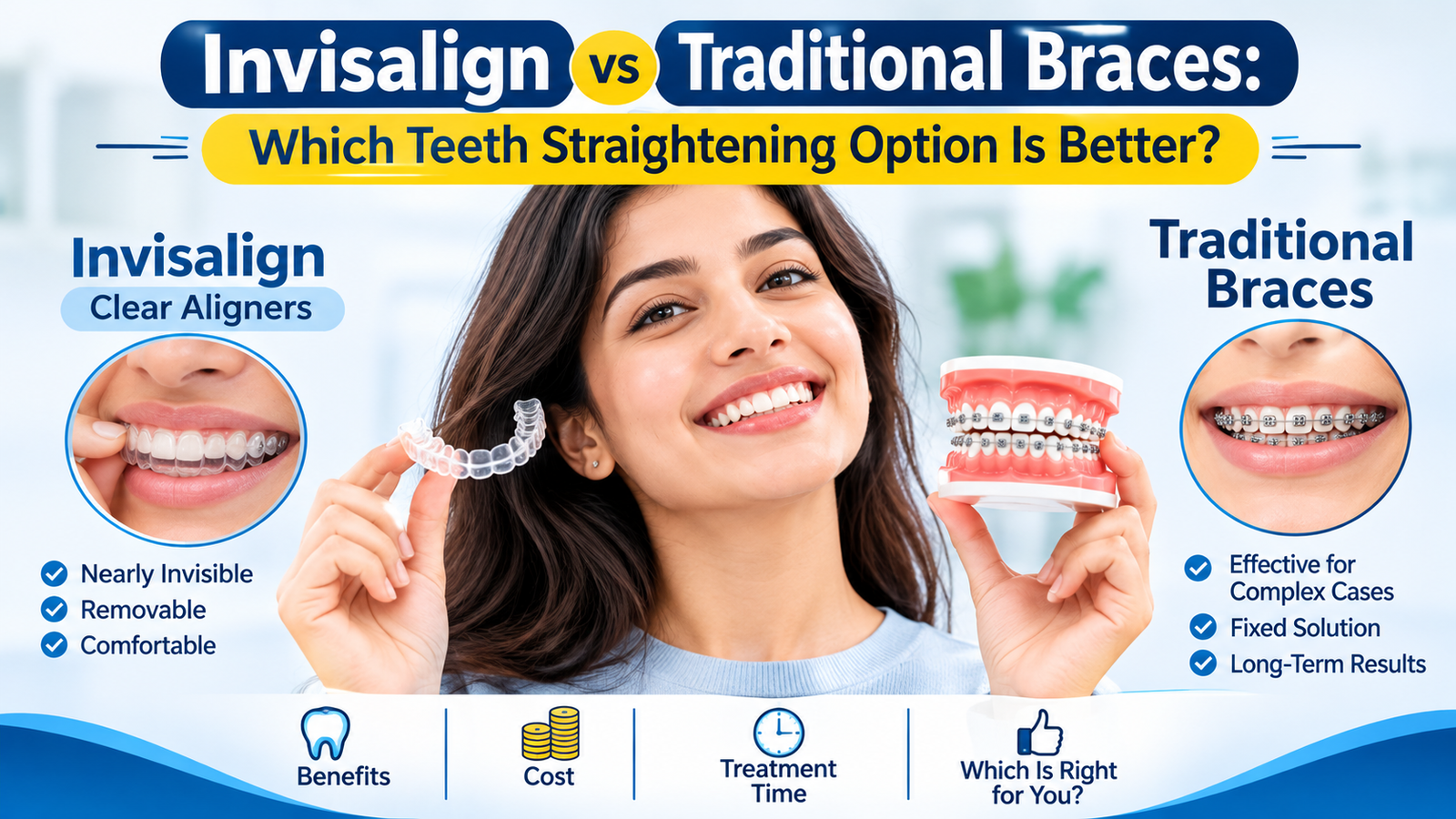
Today, patients have multiple options for straightening their teeth, with Invisalign and traditional braces being two popular choices. While both treatments aim to improve tooth alignment, they differ in appearance, comfort, maintenance, treatment approach, and suitability.
If you are confused about choosing between Invisalign and traditional braces, understanding their differences can help you make an informed decision.
At DentSee Dental Clinic, we believe that every smile is unique. The right teeth-straightening treatment depends on your dental condition, orthodontic requirements, lifestyle, and personal preferences.
In this blog, we will compare Invisalign and traditional braces, including their benefits, limitations, treatment duration, cost factors, and effectiveness.
What Is Invisalign Treatment?
Invisalign is a brand of clear aligner treatment that uses a series of transparent, removable plastic trays to gradually move teeth into their desired positions.
These aligners are custom-made according to a digital treatment plan prepared by a dental professional. Each set of aligners applies controlled pressure to specific teeth, gradually improving their alignment.
Benefits of Invisalign
- Nearly Invisible Appearance: Transparent aligners are discreet and less noticeable than conventional metal braces.
- Removable Design: You can remove aligners while eating, drinking anything other than water, brushing, and flossing.
- Comfortable Treatment: Smooth plastic aligners do not have metal brackets or wires that can irritate the cheeks and lips.
- Better Oral Hygiene: Since aligners are removable, brushing and flossing are generally easier.
- Convenience: Clear aligners can fit conveniently into many professional, academic, and social lifestyles.
- Digital Treatment Planning: Digital scans and treatment simulations may help patients understand the planned tooth movements.
However, Invisalign requires discipline. Patients generally need to wear their aligners for approximately 20–22 hours daily, following their orthodontist’s instructions.
What Are Traditional Braces?
Traditional braces are fixed orthodontic appliances used to correct crooked teeth, overcrowding, spacing problems, and certain bite irregularities.
They consist of small brackets attached to the teeth and connected with orthodontic wires. These wires apply continuous, controlled pressure to gradually move teeth into their correct positions.
Traditional braces are available in different types, including:
- Metal Braces: Conventional braces made using stainless steel brackets and wires.
- Ceramic Braces: Tooth-coloured brackets that blend more naturally with the teeth.
- Self-Ligating Braces: Braces that use specialised brackets to hold the archwire without conventional elastic ligatures.
Benefits of Traditional Braces
- Effective for Many Complex Cases: Fixed braces can address a wide range of orthodontic problems, including certain complex tooth movements.
- Continuous Treatment: Since braces remain attached to the teeth, treatment does not depend on remembering to wear removable appliances.
- Suitable for Different Age Groups: Braces can be used for children, teenagers, and adults when clinically appropriate.
- Multiple Options: Patients can choose from metal, ceramic, and other orthodontic systems.
- Controlled Tooth Movement: Orthodontists can adjust the wires and brackets throughout treatment to achieve the planned results.
Traditional braces may initially cause mild discomfort, soreness, or irritation as the teeth begin moving and after adjustment appointments.
Invisalign vs Traditional Braces: Key Differences
Understanding the differences between Invisalign and traditional braces can help you identify which option may suit your needs.
| Comparison Factor | Invisalign | Traditional Braces |
| Appearance | Transparent and discreet | Visible metal or ceramic brackets |
| Design | Removable aligner trays | Fixed brackets and wires |
| Comfort | Smooth plastic material | May cause initial irritation |
| Eating | Remove before meals | Avoid certain hard and sticky foods |
| Oral Hygiene | Easier to brush and floss | Requires additional cleaning |
| Compliance | Requires consistent wear | Fixed throughout treatment |
| Complex Cases | Suitable for selected cases | Suitable for a wide range of cases |
| Dental Visits | Monitoring and aligner changes | Regular adjustments |
| Maintenance | Clean aligners regularly | Clean around brackets and wires |
Both options can provide excellent orthodontic results when selected appropriately and monitored by a qualified dental professional.
- Appearance: Which Option Looks Better?
Appearance is one of the biggest differences between Invisalign and traditional braces.
Invisalign: Clear aligners are made from transparent plastic, making them less noticeable during everyday activities. They are a popular choice among adults and working professionals who prefer a discreet orthodontic treatment.
Traditional Braces: Metal braces are more visible because of their brackets and wires. Ceramic braces offer a less noticeable alternative because their brackets are tooth-coloured.
Which Is Better?
If appearance is your primary concern, Invisalign may be a suitable option. However, ceramic braces can also provide a more discreet alternative to traditional metal braces.
- Comfort: Invisalign vs Traditional Braces
Comfort is another important consideration during orthodontic treatment.
Invisalign: The aligners have smooth surfaces and are custom-designed to fit your teeth. They generally cause less irritation to the cheeks and lips. However, you may experience temporary pressure or soreness when switching to a new set.
Traditional Braces: Brackets and wires may initially irritate the inside of your cheeks and lips. Some patients experience soreness after adjustment appointments.
Which Is Better?
Many patients find clear aligners more comfortable because they do not contain metal brackets or wires. However, both treatments can cause temporary discomfort as teeth move.
- Treatment Duration: How Long Does Teeth Straightening Take?
Treatment duration depends on the complexity of tooth movement, bite correction requirements, and individual response to treatment.
Invisalign Treatment Duration:
Some mild alignment cases may take approximately 6–12 months, while more complex cases can require longer treatment.
Traditional Braces Treatment Duration:
Traditional braces commonly require approximately 18–24 months, although treatment may be shorter or longer depending on the patient’s condition.
Which Is Better?
Neither treatment is universally faster. Your orthodontist can estimate the expected treatment duration after examining your teeth and bite.
- Eating and Food Restrictions
Your eating habits may influence which orthodontic option is more convenient for you.
Invisalign:
- Remove aligners before eating.
- Avoid eating while wearing aligners.
- Drink plain water while wearing them.
- Clean your teeth before putting aligners back in.
Traditional Braces:
- Avoid hard foods such as ice and hard candies.
- Avoid sticky foods such as chewing gum and toffees.
- Cut hard fruits and vegetables into smaller pieces.
- Avoid biting directly into hard foods.
Which Is Better?
Invisalign offers more flexibility because the aligners can be removed during meals. Traditional braces require greater attention to food choices throughout treatment.
- Oral Hygiene: Which Is Easier to Maintain?
Maintaining oral hygiene is essential during orthodontic treatment.
Invisalign: Since aligners are removable, you can brush and floss your teeth normally. You must also clean your aligners regularly to prevent bacterial buildup and unpleasant odours.
Traditional Braces: Food particles can get trapped around brackets and wires. Special orthodontic toothbrushes, interdental brushes, and flossing tools may be helpful.
Which Is Better?
Invisalign generally makes daily oral hygiene easier. However, patients using either treatment must maintain proper brushing and flossing habits.
- Cost of Invisalign vs Traditional Braces
Treatment cost is an important factor when choosing between clear aligners and traditional braces.
The cost of orthodontic treatment varies depending on the complexity of the case, treatment duration, type of appliance, and dental clinic.
Factors affecting Invisalign treatment costs include:
- Number of aligner trays required.
- Complexity of tooth movements.
- Duration of treatment.
- Additional attachments or procedures.
- Refinement aligners, if required.
Factors affecting traditional braces costs include:
- Type of braces selected.
- Metal or ceramic brackets.
- Complexity of orthodontic correction.
- Number of adjustment appointments.
- Overall treatment duration.
In general, Invisalign may cost more than conventional metal braces, but actual costs vary between clinics and individual cases.
For an accurate estimate, consult your orthodontic professional and request a complete treatment cost breakdown before starting.
- Which Treatment Is Better for Complex Dental Problems?
Not every orthodontic problem can be treated using the same method.
Invisalign may be suitable for:
- Mild to moderate crowding.
- Small gaps between teeth.
- Selected bite irregularities.
- Certain cases of overbite and underbite.
- Minor to moderate alignment corrections.
Traditional braces may be recommended for:
- Significant tooth crowding.
- Complex tooth rotations.
- Certain severe bite problems.
- Teeth requiring substantial positional correction.
- Cases involving more complicated orthodontic movements.
Modern clear aligner systems can manage many complex cases, but suitability depends on the specific movements required and the orthodontist’s assessment.
A detailed dental examination is necessary before selecting a treatment option.
Invisalign vs Traditional Braces: Which Is Better for Adults?
Both Invisalign and traditional braces can be effective for adults who want to improve their smile and correct bite problems.
Invisalign is often preferred by adults because of its transparent appearance, removable design, and convenience during professional and social activities.
Traditional braces remain a reliable option for adults who require more extensive orthodontic correction or prefer a fixed treatment approach.
Your orthodontist will consider your dental condition, treatment goals, lifestyle, and budget before recommending an appropriate option.
Invisalign vs Braces for Teenagers: What Should Parents Know?
Parents often wonder whether clear aligners or traditional braces are better for teenagers.
Both options may be suitable depending on the teenager’s dental development, orthodontic needs, and ability to follow treatment instructions.
Invisalign for Teenagers:
- Transparent and discreet.
- Removable during meals.
- Requires responsible daily wear.
- Suitable for selected orthodontic cases.
Traditional Braces for Teenagers:
- Remain fixed throughout treatment.
- Do not depend on remembering to wear aligners.
- Can address many orthodontic problems.
- Require careful brushing and food precautions.
Parents should discuss both options with an orthodontist to determine the most suitable treatment for their child’s smile.
How to Choose Between Invisalign and Traditional Braces?
Before starting orthodontic treatment, consider the following factors:
- Dental Condition: Understand whether you have crowding, spacing, or bite-related problems.
- Treatment Goals: Decide whether your priority is appearance, comfort, convenience, or a particular type of correction.
- Lifestyle: Consider whether you can consistently wear removable aligners.
- Budget: Compare the complete treatment costs and payment options.
- Treatment Duration: Understand the estimated timeline and follow-up requirements.
- Professional Guidance: Consult a qualified orthodontist who can explain the advantages and limitations of each option.
Choosing the right treatment is not simply about selecting the most popular option. It is about finding a solution that meets your individual dental requirements.
Why Choose DentSee Dental Clinic for Teeth Straightening Treatment?
At DentSee Dental Clinic, we understand that every patient has different dental needs and smile goals.
Whether you are considering Invisalign, clear aligners, or traditional braces, a proper orthodontic evaluation is an important first step towards achieving a healthier and straighter smile.
Our approach focuses on understanding your dental concerns, evaluating your tooth alignment, and discussing suitable treatment options based on your clinical requirements.
When considering orthodontic treatment, patients should look for:
- Detailed dental and orthodontic evaluation.
- Treatment recommendations based on individual needs.
- Clear explanations of available treatment options.
- Guidance regarding oral hygiene and appliance care.
- Regular monitoring throughout treatment.
If you are considering teeth straightening treatment, consult DentSee Dental Clinic to discuss the options suitable for your smile.
Conclusion
Both Invisalign and traditional braces are effective orthodontic treatment options for correcting misaligned teeth and improving smiles.
Invisalign offers a discreet, removable, and convenient solution for patients who can follow the required daily wearing schedule. Traditional braces provide a fixed treatment approach and can address a wide range of orthodontic problems.
The best option depends on your dental condition, treatment goals, lifestyle, budget, and orthodontic requirements.
If you are unsure whether to choose Invisalign or traditional braces, schedule a consultation at DentSee Dental Clinic. A professional dental evaluation can help you understand your options and choose the right path towards a healthier, straighter smile.
Frequently Asked Questions (FAQs)
- Is Invisalign better than traditional braces?
Invisalign may be better for patients who prefer discreet and removable orthodontic treatment. Traditional braces may be more suitable for certain complex orthodontic cases. The right choice depends on your dental condition.
- Is Invisalign more expensive than traditional braces?
Invisalign treatment is generally more expensive than conventional metal braces. However, the actual cost depends on treatment complexity, duration, and the dental clinic.
- How long does Invisalign treatment take?
Invisalign treatment may take around 6–18 months or longer, depending on the complexity of the case and patient compliance.
- Are traditional braces painful?
Traditional braces may cause temporary soreness after placement and adjustment appointments. This discomfort generally improves as the mouth adapts.
- Can Invisalign fix crooked teeth?
Yes. Invisalign can correct many cases of crooked teeth, crowding, and spacing. However, some complex cases may require traditional braces or alternative orthodontic treatment.
- Can I eat while wearing Invisalign?
No. Invisalign aligners should generally be removed before eating. Plain water is usually safe to drink while wearing them.
- Which is faster: Invisalign or braces?
Treatment duration depends on the patient’s dental condition and required tooth movements. Neither option is always faster.
- Can adults get traditional braces?
Yes. Adults can undergo orthodontic treatment with traditional braces or clear aligners if their teeth and gums are healthy enough for treatment.
- How many hours should I wear Invisalign aligners daily?
Invisalign aligners are generally recommended for approximately 20–22 hours per day, unless your orthodontist provides different instructions.
- How do I know which treatment is right for me?
A dental and orthodontic examination is necessary to evaluate your tooth alignment, bite, oral health, and treatment requirements. Your orthodontist can then recommend a suitable option.
About DentSee Dental Clinic
DentSee Dental Clinic focuses on patient-centred dental care and helping patients understand their oral health and treatment options. If you are exploring Invisalign, traditional braces, or other teeth-straightening solutions, professional guidance can help you make an informed decision.