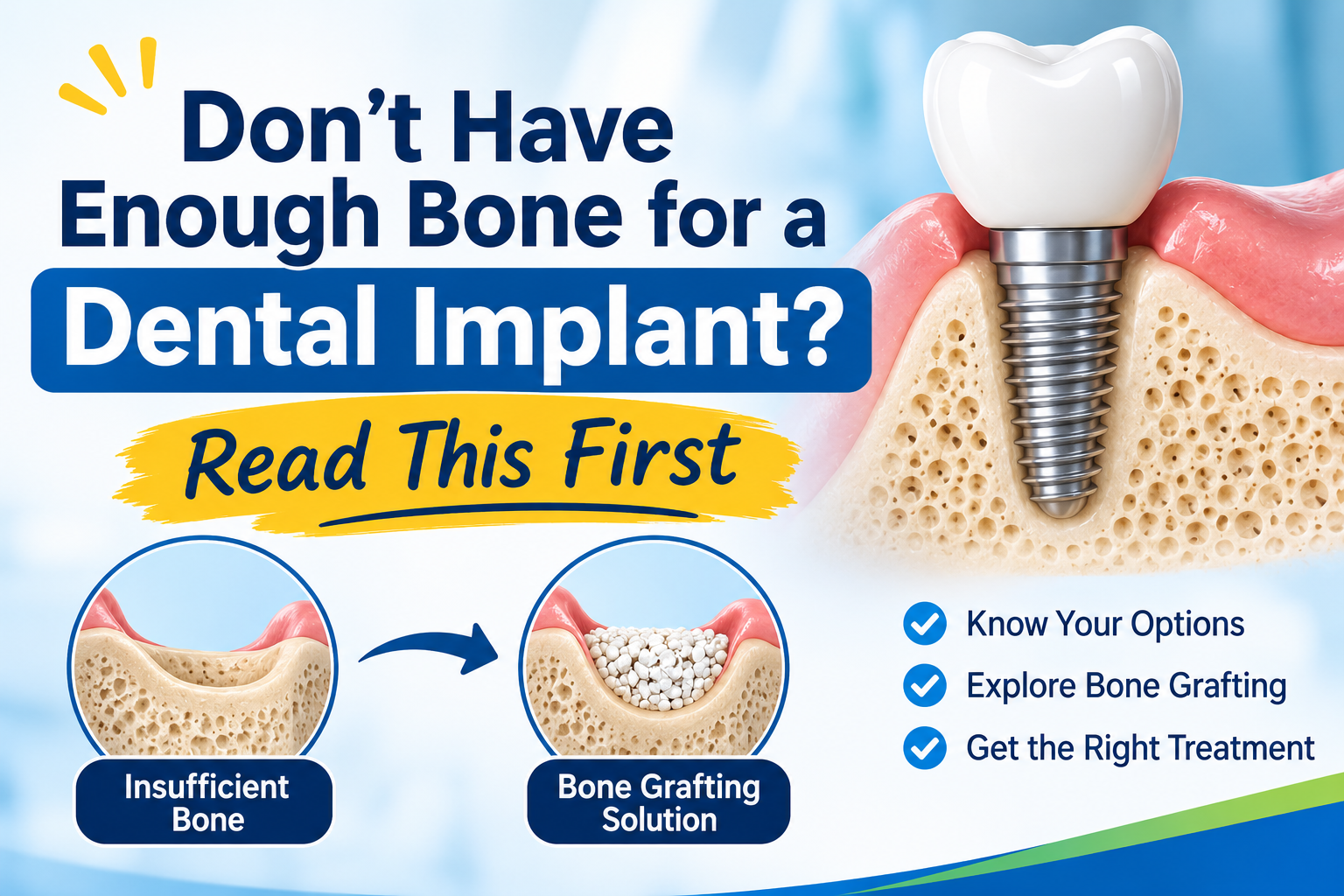
Dental implants are one of the most effective solutions for replacing missing teeth. They look, feel, and function much like natural teeth, helping restore your smile, chewing ability, and confidence. However, not everyone has enough jawbone to support a dental implant.
If your dentist has told you that you have insufficient bone for dental implants, you may feel disappointed or worried about your treatment options. The good news is that having low bone volume does not automatically mean you cannot get dental implants.
With modern dental techniques, procedures such as bone grafting and sinus lifting can help prepare the jawbone for successful implant placement in suitable cases.
At DentSee Dental Clinic, understanding your bone condition is an important first step towards choosing the right tooth replacement solution.
Let’s explore why bone density matters, what causes bone loss, and what treatment options are available.
Why Is Bone Important for Dental Implants?
A dental implant is a small, screw-shaped post, usually made of titanium, that is placed inside the jawbone to replace a missing tooth root.
For an implant to remain stable, it needs sufficient bone volume and quality. After placement, the implant gradually integrates with the surrounding bone through a natural healing process called osseointegration.
Adequate jawbone helps to:
- Provide stability and support to the dental implant.
- Maintain proper implant positioning.
- Support normal chewing forces.
- Reduce the risk of implant movement or failure.
- Maintain the natural shape of your jaw and facial structure.
When there is insufficient bone, placing an implant may become difficult or require additional procedures.
What Causes Bone Loss in the Jaw?
Jawbone loss is a common dental concern, particularly among people who have missing teeth for a long time.
Here are some common reasons why jawbone volume may decrease.
- Missing Teeth for a Long Time
Your natural tooth roots stimulate the jawbone during chewing. When a tooth is lost or extracted, this stimulation stops.
Over time, the surrounding bone may begin to shrink because it no longer receives the same functional pressure.
This is one of the most common reasons patients experience insufficient bone for dental implants.
- Advanced Gum Disease
Periodontal disease is a serious gum infection that can damage the tissues and bone supporting your teeth.
If left untreated, it may cause:
- Gum recession.
- Bone deterioration.
- Loose teeth.
- Tooth loss.
Patients with a history of advanced gum disease may require additional evaluation before dental implant treatment.
- Long-Term Use of Removable Dentures
Removable dentures can replace missing teeth, but they do not provide the same stimulation to the jawbone as natural tooth roots.
Over time, the jawbone underneath the dentures may gradually shrink, affecting denture fit and potentially complicating future implant placement.
- Dental Infections or Tooth Abscess
Severe dental infections can damage the bone surrounding the affected tooth.
In some cases, an infected tooth may need extraction, and the surrounding bone may require additional treatment before an implant can be placed.
- Injury or Trauma
Accidents, facial injuries, or damage to the jaw can affect the bone structure.
Depending on the severity of the injury, patients may require bone reconstruction before dental implant treatment.
How Do Dentists Check Whether You Have Enough Bone for Dental Implants?
Before recommending dental implant surgery, your dentist needs to evaluate the quantity and quality of your jawbone.
A proper assessment helps determine whether you can receive an implant directly or need additional treatment.
Common diagnostic methods include:
- Clinical Examination
Your dentist examines your gums, teeth, jaw structure, and oral health to identify potential complications.
- Dental X-rays
X-rays help assess the general condition of your teeth and supporting bone.
- CBCT Scan (Cone Beam Computed Tomography)
A CBCT scan provides detailed three-dimensional images of your jawbone. It helps evaluate:
- Bone height.
- Bone width.
- Bone density and structure.
- Nearby nerves.
- Sinus location.
- Suitable implant placement positions.
Based on these findings, your dentist can develop an appropriate treatment plan.
What If You Don’t Have Enough Bone for a Dental Implant?
If your jawbone is insufficient, you may still be eligible for dental implant treatment after undergoing certain procedures.
Here are some commonly used treatment options.
- Bone Grafting for Dental Implants
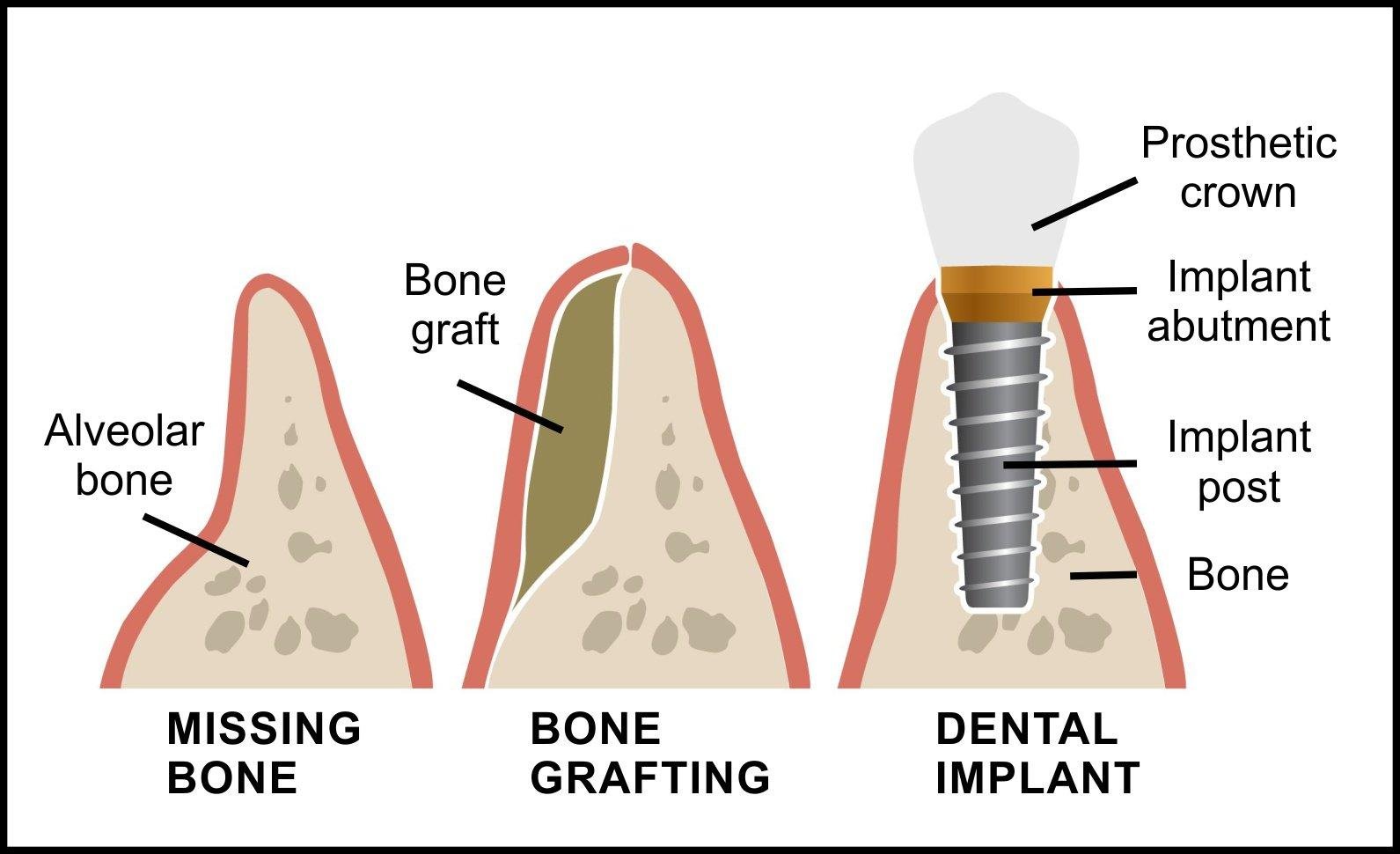
Bone grafting is a procedure used to increase the volume of bone in areas where the jawbone has become thin or weak.
During this procedure, a suitable bone graft material is placed in the area that needs additional support.
The graft material may come from:
- Your own bone.
- Donor bone.
- Animal-derived bone material.
- Synthetic bone substitutes.
Over time, the graft supports new bone formation and healing.
Benefits of bone grafting:
- Helps restore lost bone volume.
- May make implant placement possible.
- Provides additional support for implant stability.
- Helps preserve jawbone structure.
The healing period varies depending on the amount of grafting required and individual healing factors.
- Sinus Lift Surgery
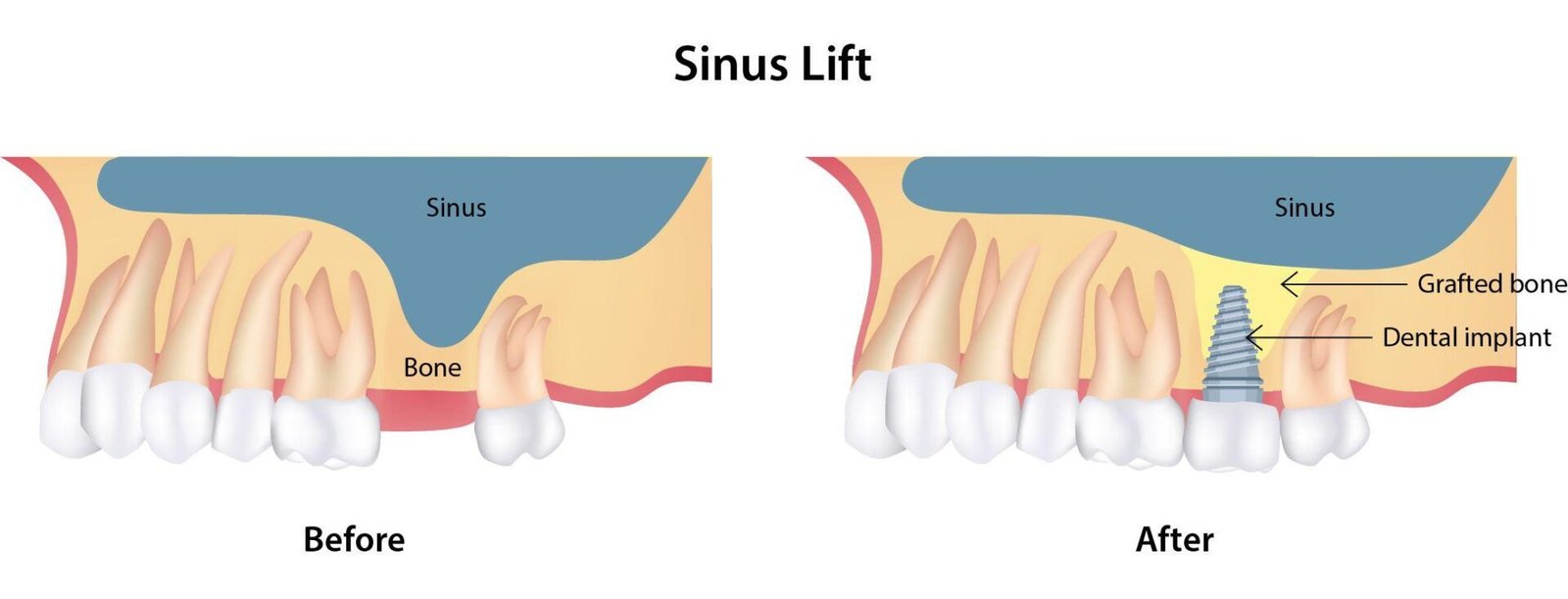
A sinus lift, also known as sinus augmentation, is a procedure used when there is insufficient bone height in the upper back jaw.
The maxillary sinuses are air-filled spaces located above the upper back teeth. When these teeth are missing, the available bone between the mouth and sinus may become too thin for implant placement.
During a sinus lift:
- The sinus membrane is gently elevated.
- Bone graft material is placed beneath the membrane.
- The area is allowed to heal.
- Dental implants may be placed once adequate bone support is achieved.
In selected cases, the implant and sinus lift procedure may be performed together.
- Ridge Augmentation
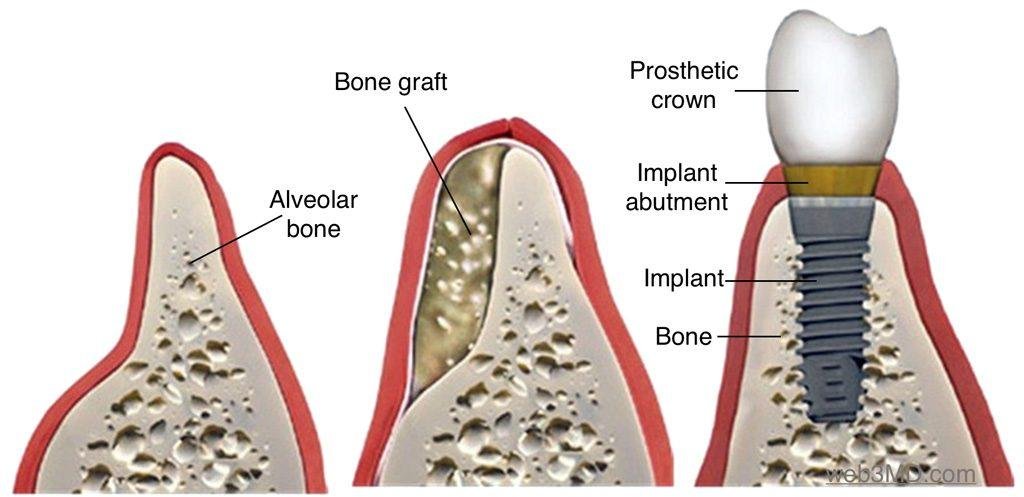
Sometimes, the jawbone becomes too narrow or uneven after tooth loss.
Ridge augmentation helps rebuild the natural contour and width of the jawbone.
It may be recommended when:
- The jawbone is too narrow for implant placement.
- Bone loss has affected the shape of the ridge.
- Additional bone support is required.
- The implant needs a more suitable foundation.
The procedure can improve the available bone structure for future implant placement.
- Short or Specially Designed Dental Implants
In selected cases, dentists may consider shorter or specially designed implants when the available bone height is limited.
These implants may help avoid additional bone augmentation procedures in suitable patients.
However, their suitability depends on several factors, including bone quality, implant position, bite forces, and overall oral health.
Your dentist will determine whether this approach is appropriate after evaluating your CBCT scan.
Can You Get Dental Implants Without Bone Grafting?
Yes, some patients with limited bone volume may still qualify for dental implants without undergoing bone grafting.
Depending on the individual condition, possible approaches include:
- Short dental implants.
- Angled implant placement.
- Specially designed implant systems.
- Alternative implant positioning techniques.
However, these approaches are not suitable for everyone.
A detailed examination and three-dimensional imaging are essential before deciding whether bone grafting can be avoided.
How Long Does Bone Grafting Take Before Dental Implant Placement?
The healing time after bone grafting depends on the size of the graft, the patient’s health, and the type of procedure performed.
| Procedure | General Healing Time |
| Minor bone grafting | Around 3–6 months |
| Major bone augmentation | Around 4–9 months or longer |
| Sinus lift | Around 4–9 months, depending on the case |
| Ridge augmentation | Around 4–6 months or longer |
These are approximate timelines, not guaranteed treatment durations. Some patients may receive implants during the same procedure, while others need to wait until the graft has healed sufficiently.
What Happens If You Ignore Jawbone Loss?
Ignoring jawbone loss can create additional challenges for future dental treatment.
Possible complications include:
- Difficulty placing implants: Reduced bone volume may limit suitable implant positions.
- Changes in facial appearance: Significant jawbone loss can contribute to changes in facial support.
- Poor denture fit: Progressive bone loss may make removable dentures unstable.
- Reduced chewing efficiency: Missing teeth and inadequate support can affect eating comfort.
- More complex future treatment: Extensive bone loss may require additional surgical procedures.
Seeking dental advice early after tooth loss can help preserve available bone and improve future treatment options.
How Can You Prevent Bone Loss After Tooth Extraction?
Although some bone loss after tooth extraction is natural, certain steps may help reduce its impact.
Here are some useful recommendations:
- Discuss tooth replacement options with your dentist early.
- Ask whether socket preservation bone grafting is suitable after extraction.
- Maintain good oral hygiene.
- Treat gum disease promptly.
- Attend regular dental checkups.
- Avoid smoking and tobacco products.
- Follow your dentist’s post-extraction instructions.
Early planning can help protect your oral health and make future tooth replacement easier.
Who Is a Suitable Candidate for Dental Implants After Bone Grafting?
Patients with insufficient jawbone may be considered for bone grafting and subsequent dental implant placement if their overall oral and general health support treatment.
You may be considered a suitable candidate if:
- You have one or more missing teeth.
- Your jawbone has reduced in height or width.
- Your gum disease is controlled.
- You have adequate healing capacity.
- You can maintain good oral hygiene.
- You are willing to follow the recommended treatment and follow-up schedule.
Certain medical conditions, medications, smoking habits, and healing concerns may affect treatment planning. Your dentist will evaluate these factors before recommending surgery.
Frequently Asked Questions (FAQs)
- Can I get dental implants if I have low bone density?
Yes, in some cases. Low bone volume does not automatically disqualify you from dental implants. Bone grafting, sinus lifting, or alternative implant techniques may help depending on your condition.
- Is bone grafting necessary for every dental implant?
No. Many patients have sufficient jawbone for direct implant placement. Bone grafting is recommended only when additional bone support is needed.
- Is dental bone grafting painful?
Bone grafting is generally performed under local anaesthesia, which helps minimise discomfort during the procedure. Some swelling, soreness, or mild discomfort may occur during recovery.
- How long does a dental bone graft last?
Once successfully integrated, the grafted bone can provide long-term support. Its stability depends on healing, oral hygiene, gum health, and other individual factors.
- Can dental implants be placed immediately after bone grafting?
In selected cases, implants can be placed during the same procedure. However, larger grafts may require several months of healing before implant placement.
- What happens if I don’t get a bone graft?
If there is insufficient bone and no suitable alternative implant technique, placing an implant may increase the risk of instability or complications. Your dentist may recommend another tooth replacement option.
- Is a CBCT scan necessary before dental implant surgery?
A CBCT scan is commonly used for detailed implant planning because it helps assess bone dimensions and the location of important anatomical structures. Your dentist will determine whether it is required in your case.
Conclusion: Insufficient Bone Doesn’t Always Mean You Cannot Get Dental Implants
Having insufficient jawbone can make dental implant treatment more challenging, but it does not necessarily mean you have to give up on restoring your smile.
With treatment options such as bone grafting, sinus lift surgery, and alternative implant techniques, many patients with reduced bone volume may still be suitable candidates for dental implants.
The most important step is to get a proper dental evaluation and understand your available treatment options.
At DentSee Dental Clinic, patients can receive professional dental guidance to understand missing tooth replacement options and determine the next steps based on their oral health.
If you have been told that you don’t have enough bone for dental implants, schedule a dental consultation and explore the possibilities of restoring your smile.
DentSee Dental Clinic
Website: https://dentseeclinic.com/
Contact: 093223 80886