
Signs Your Tooth Colored Filling Needs Replacement
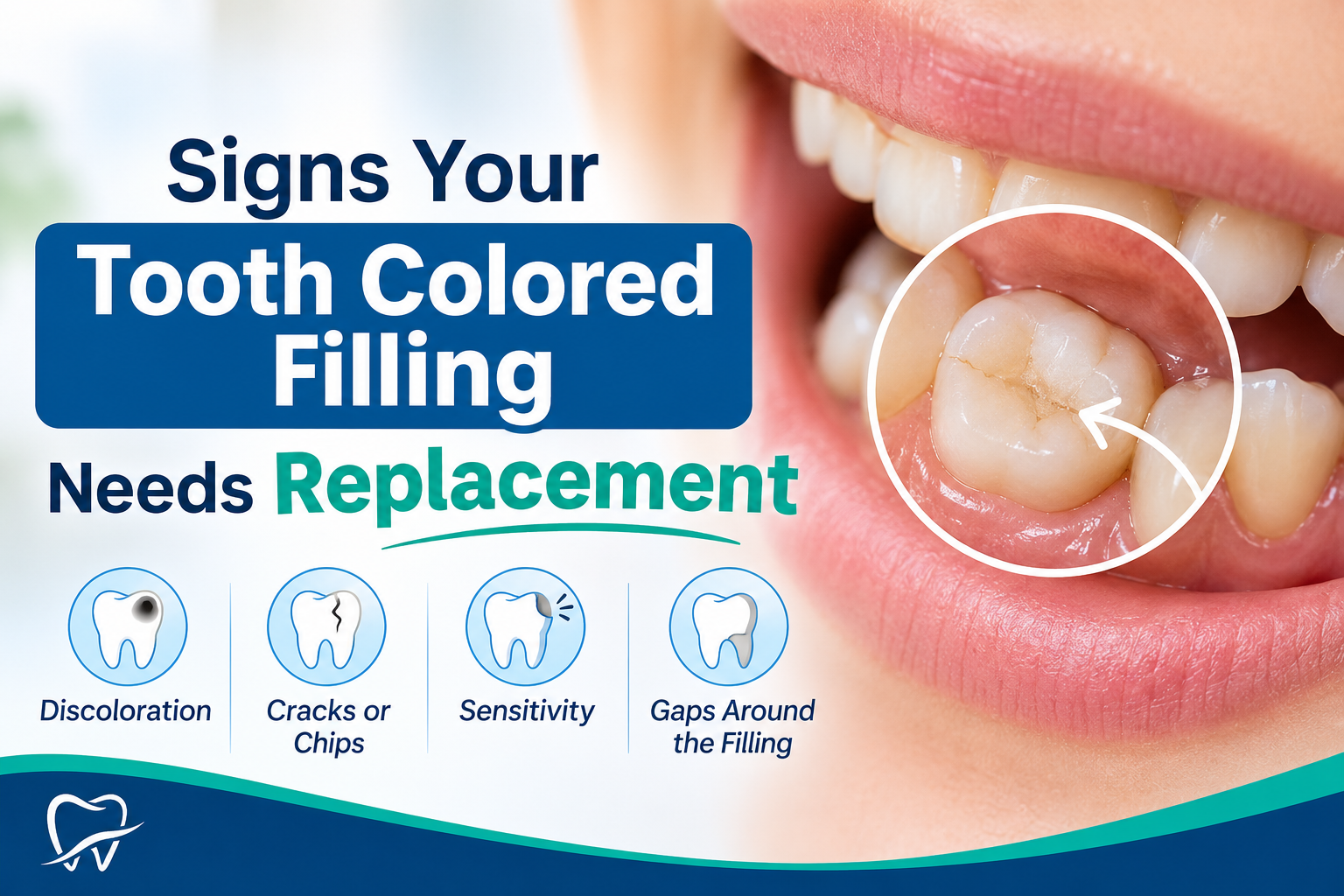
Signs Your Tooth Colored Filling Needs Replacement
Tooth-coloured fillings are a popular dental treatment for repairing cavities, restoring damaged teeth, and maintaining a natural-looking smile. These fillings are designed to blend with your original tooth colour, making them an excellent alternative to traditional silver amalgam fillings.
However, like other dental restorations, tooth-coloured fillings do not last forever. Over time, everyday chewing, teeth grinding, temperature changes, and normal wear and tear can affect their strength and durability.
Recognising the signs that your filling needs replacement can help prevent further tooth damage, infections, and discomfort. If you have an old dental filling or are experiencing sensitivity, consulting the Best Tooth Coloured Fillings Doctor in Wakad can help you understand whether your restoration needs repair or replacement.
What Are Tooth-Coloured Fillings?
Tooth-coloured fillings, commonly known as composite fillings, are dental restorations made using a special resin material that closely matches the natural shade of your teeth.
They are commonly used to:
- Repair cavities caused by tooth decay.
- Restore chipped or cracked teeth.
- Fill small gaps between teeth in selected cases.
- Repair minor tooth damage.
- Restore the natural appearance and function of teeth.
Unlike traditional metal fillings, composite fillings bond directly to the tooth structure and provide a more natural appearance.
7 Signs Your Tooth-Coloured Filling Needs Replacement
Recognising early warning signs can help you avoid complicated dental procedures. Here are seven common signs that indicate your existing filling may need attention.
- Persistent Tooth Sensitivity
Do you experience discomfort when drinking cold water, eating hot food, or consuming sweet items?
Sensitivity around a filled tooth may indicate that the filling is worn, damaged, or no longer sealing the tooth properly. In some cases, decay may have developed underneath or around the filling.
If sensitivity continues or becomes worse, schedule a dental examination to identify the underlying cause.
- Visible Cracks or Chips in the Filling
Composite fillings can develop small cracks or chips due to chewing pressure, accidental trauma, or teeth grinding.
You may notice:
- A visible crack on the filling surface.
- A small piece of filling material missing.
- Rough or uneven edges.
- Discomfort while chewing.
Damaged fillings may allow bacteria to enter the affected area, increasing the risk of further decay. Depending on the extent of damage, your dentist may recommend repairing or replacing the filling.
- Discolouration Around the Filling
Tooth-coloured fillings are designed to match your natural teeth, but they can become stained over time.
Common causes include:
- Frequent consumption of tea and coffee.
- Smoking or tobacco use.
- Poor oral hygiene.
- Age-related wear and staining.
If you notice dark lines, brown patches, or unusual discolouration around an old filling, consult your dentist. Discolouration does not always mean replacement is necessary, but it should be examined to rule out leakage or recurrent tooth decay.
- Pain While Chewing Food
Pain or discomfort when biting or chewing can indicate a problem with your existing filling.
Possible reasons include:
- A cracked or loose filling.
- An uneven filling surface.
- Recurrent tooth decay.
- Damage to the underlying tooth.
Ignoring chewing discomfort can lead to further complications. A dental professional can examine the tooth and determine whether the filling needs adjustment, repair, or replacement.
- Food Frequently Gets Stuck Around the Filled Tooth
If food particles regularly get trapped around a previously filled tooth, the filling may have developed gaps or rough edges.
This can happen when:
- The filling material starts wearing down.
- The edges become damaged.
- The contact between neighbouring teeth changes.
- New tooth decay develops around the restoration.
Food accumulation can increase plaque formation and the risk of gum irritation. Your dentist can assess the area and recommend the appropriate treatment.
- The Filling Feels Loose or Has Fallen Out
A loose or missing filling is one of the clearest signs that you need dental attention.
When a filling becomes loose, the underlying tooth may be exposed to food particles, bacteria, and temperature changes.
If your filling falls out:
- Avoid chewing on the affected side.
- Keep the area clean.
- Avoid extremely hot or cold foods if they cause discomfort.
- Schedule a dental appointment as soon as possible.
Depending on the remaining tooth structure, your dentist may recommend a new composite filling or another restoration.
- Bad Taste or Unpleasant Smell Around the Tooth
An unpleasant taste or smell near a filled tooth may sometimes indicate trapped food, bacterial accumulation, or recurrent decay.
If the filling has developed gaps, bacteria may collect around the restoration and affect the surrounding tooth structure.
Persistent bad taste, swelling, pain, or discharge should not be ignored. Seek a dental examination promptly to identify the cause.
How Long Do Tooth-Coloured Fillings Last?
The lifespan of composite fillings depends on several factors, including the size and location of the filling, oral hygiene habits, chewing pressure, and dental care.
In many cases, tooth-coloured composite fillings last approximately 5–10 years, although some may last longer with proper care.
| Factor | Effect on Filling Life |
| Oral hygiene | Good hygiene helps prevent recurrent decay |
| Chewing habits | Excessive pressure may damage fillings |
| Teeth grinding | Can cause cracks and premature wear |
| Filling size | Larger restorations may experience more stress |
| Regular dental checkups | Help identify early damage |
Regular dental examinations can help your dentist monitor the condition of existing fillings and recommend timely treatment.
What Happens If You Don’t Replace a Damaged Filling?
Ignoring a damaged or worn-out filling can lead to more serious dental problems.
Some possible complications include:
- Recurrent tooth decay: Bacteria may enter gaps around the filling and cause new cavities.
- Tooth fractures: A weakened tooth may become more vulnerable to cracks.
- Increased sensitivity: Exposed tooth structures can cause discomfort.
- Dental infection: Untreated decay may eventually affect the dental pulp.
- Root canal treatment: Deep infection may require more extensive treatment.
Replacing a damaged filling at the right time can help preserve your natural tooth structure and avoid more complex procedures.
What Is the Procedure for Replacing a Tooth-Coloured Filling?
Replacing an old or damaged composite filling is generally a straightforward dental procedure. The exact treatment depends on the condition of the tooth.
The process usually involves the following steps:
Step 1: Dental Examination
Your dentist examines the affected tooth and checks for cracks, decay, sensitivity, and damage around the existing filling. Dental X-rays may be recommended when necessary.
Step 2: Removing the Old Filling
The damaged or worn-out filling material is carefully removed while preserving as much healthy tooth structure as possible.
Step 3: Cleaning the Tooth
The affected area is cleaned, and any existing decay is removed.
Step 4: Applying New Composite Material
A suitable tooth-coloured composite material is placed in layers and hardened using a special curing light.
Step 5: Shaping and Polishing
The new filling is shaped to match your natural tooth structure. Your dentist checks your bite and polishes the restoration for a smooth finish.
The result is a restored tooth with a natural appearance and improved functionality.
How to Make Your Tooth-Coloured Fillings Last Longer
Following good oral hygiene habits can help extend the life of your dental restorations.
Here are some practical tips:
- Brush your teeth twice daily using fluoride toothpaste.
- Floss regularly to remove food particles between teeth.
- Avoid biting hard objects such as ice, pens, and hard candy.
- Limit excessive consumption of sugary foods and beverages.
- Visit your dentist regularly for dental checkups.
- Consider a night guard if you grind or clench your teeth.
- Avoid using your teeth to open packages or break hard objects.
Remember, even if your filling looks perfectly fine, regular dental examinations are important for checking its condition.
When Should You Visit a Dentist for Filling Replacement?
You should consider visiting a dentist if you experience persistent sensitivity, pain while chewing, visible cracks, loose filling material, or repeated food trapping around a filled tooth.
Do not wait until the filling completely falls out or the tooth becomes painful. Early diagnosis can help prevent additional damage and preserve your natural teeth.
If you are searching for the Best Tooth Coloured Fillings Doctor in Wakad, DentSee Dental Clinic can help assess your existing dental fillings and guide you towards suitable restorative dental treatment.
Frequently Asked Questions (FAQs)
- How do I know if my tooth-coloured filling needs replacement?
Common signs include persistent sensitivity, visible cracks, chipped filling material, discolouration around the edges, pain while chewing, and food getting trapped around the filled tooth. A dental examination is necessary to confirm whether replacement is required.
- Can tooth-coloured fillings fall out?
Yes. Composite fillings can become loose or fall out due to wear and tear, excessive chewing pressure, tooth damage, or bonding failure. If this happens, consult your dentist promptly.
- Is replacing an old composite filling painful?
Most filling replacement procedures are comfortable. Local anaesthesia may be used depending on the depth of the cavity and the patient’s sensitivity.
- Can a damaged tooth-coloured filling be repaired instead of replaced?
Yes. Minor chips or localised damage may sometimes be repaired without removing the entire filling. However, severely damaged fillings or those associated with recurrent decay may require complete replacement.
- Are tooth-coloured fillings better than silver fillings?
Tooth-coloured composite fillings offer a more natural appearance and bond to the tooth structure. The best filling material depends on the tooth’s location, the extent of damage, chewing forces, and individual dental requirements.
- How often should I get my dental fillings checked?
Your dentist can check your fillings during routine dental examinations. Regular visits, often every six months depending on your oral health needs, help identify early signs of damage.
- Can I eat normally after getting a new tooth-coloured filling?
In most cases, you can resume eating once the procedure is complete and any numbness from local anaesthesia has worn off. Follow your dentist’s specific instructions.
Restore Your Smile with Expert Dental Care at DentSee Dental Clinic
Tooth-coloured fillings help restore damaged teeth while maintaining a natural-looking smile. However, old or damaged fillings should not be ignored, as they may increase the risk of further tooth decay and dental complications.
At DentSee Dental Clinic, patients can receive dental evaluation and guidance for maintaining healthy teeth and restoring damaged dental structures.
If you notice cracks, sensitivity, pain, or discolouration around an existing filling, schedule a dental consultation to understand your treatment options.
Looking for the Best Tooth Coloured Fillings Doctor in Wakad? Visit DentSee Dental Clinic for professional dental guidance and personalised restorative dental care.
Website: https://dentseeclinic.com/
Contact: 093223 80886