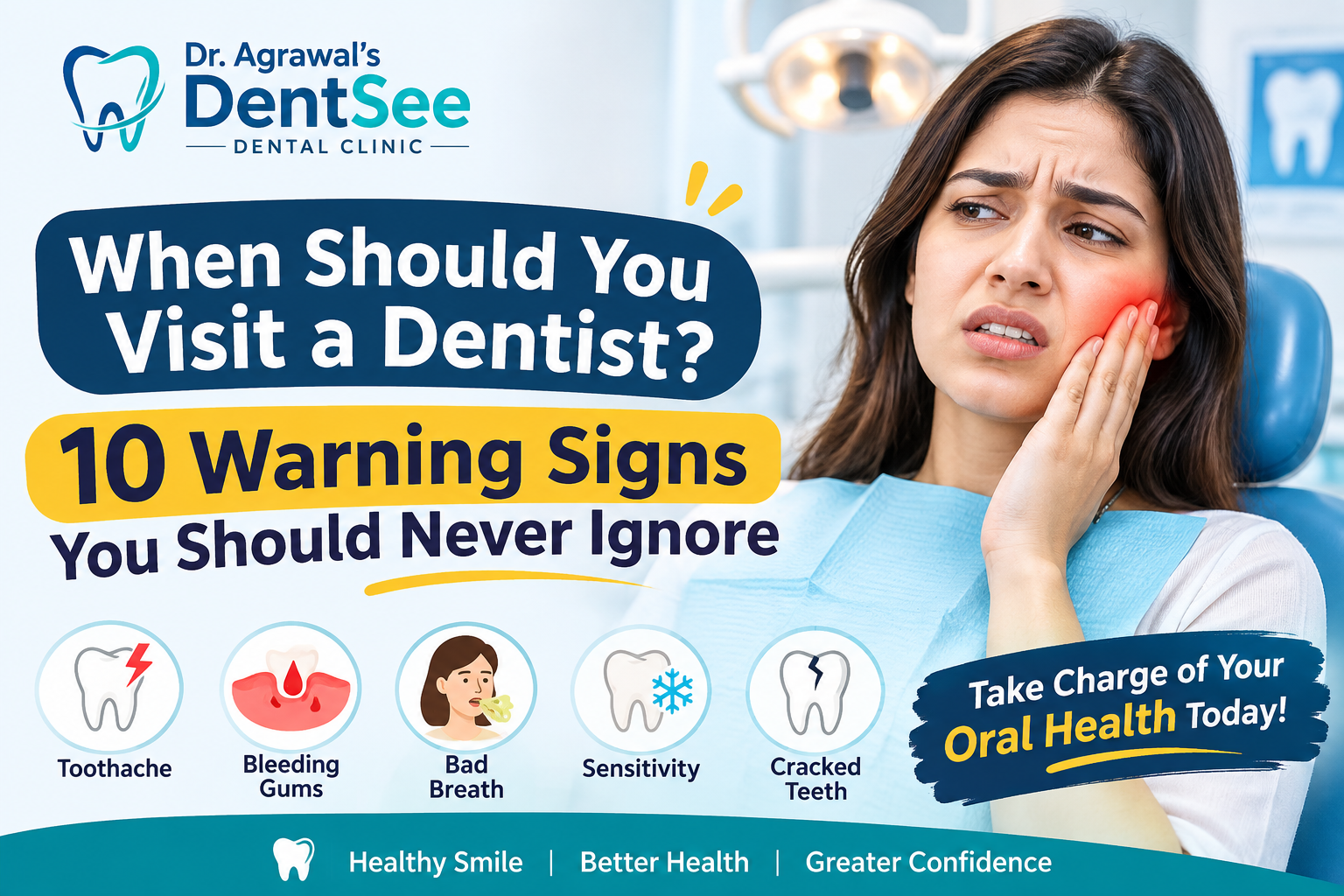
When Should You Visit a Dentist? 10 Warning Signs You Should Never Ignore
A healthy smile is more than just a sign of confidence; it is an important part of your overall health and well-being. However, many people tend to ignore dental problems until they become painful or difficult to manage. Whether it is occasional tooth sensitivity, bleeding gums, or persistent bad breath, even minor oral health concerns can indicate an underlying dental issue.
So, how do you know when it is time to visit a dentist?
At Dr. Agrawal’s DentSee Dental Clinic, we believe that early diagnosis and timely dental care can help prevent complicated oral health problems. If you are searching for the Best Dental Clinic in Wakad or an experienced Best Dentist in Wakad, understanding these warning signs can help you take better care of your smile.
Let’s explore 10 dental warning signs you should never ignore.
- Persistent Toothache or Dental Pain
A toothache is one of the most common reasons people visit a dentist. While occasional discomfort may seem manageable, persistent or recurring tooth pain should never be ignored.
It can be caused by:
- Tooth decay or cavities.
- Dental infections.
- Cracked or damaged teeth.
- Inflammation of the tooth pulp.
- Gum-related problems.
If your toothache continues for more than a day or two, consult a dentist instead of relying on temporary pain relief.
- Bleeding or Swollen Gums
Do your gums bleed while brushing or flossing? Healthy gums generally should not bleed regularly.
Bleeding, redness, tenderness, and swelling may indicate gingivitis, an early stage of gum disease. If left untreated, it can progress to periodontitis, which may damage the supporting structures of your teeth.
A dental examination and professional cleaning can help identify the cause and prevent further complications.
- Persistent Bad Breath
Bad breath, also known as halitosis, is not always caused by the food you eat. Persistent unpleasant breath may indicate an underlying oral health problem.
Common causes include:
- Poor oral hygiene.
- Bacterial buildup on the tongue.
- Gum disease.
- Tooth decay.
- Dry mouth.
If mouthwash and regular brushing are not solving the problem, it is time to schedule a dental check-up.
- Tooth Sensitivity to Hot and Cold Foods
Do you experience a sudden sharp sensation when drinking cold water, enjoying ice cream, or sipping hot tea?
Tooth sensitivity can occur due to:
- Worn-out tooth enamel.
- Exposed tooth roots.
- Gum recession.
- Tooth decay.
- Cracked teeth.
Although sensitivity may appear harmless, it can sometimes indicate an underlying dental issue. A dentist can identify the cause and recommend suitable treatment.
- Swollen Face or Jaw
Swelling around the face, jaw, or gums can be a warning sign of a dental infection or abscess.
Other symptoms may include:
- Severe tooth pain.
- Fever.
- Difficulty chewing.
- Tenderness around the affected area.
- A bad taste in the mouth.
Important: Dental swelling accompanied by fever or spreading facial swelling requires urgent dental assessment. If you experience difficulty breathing or swallowing, seek emergency medical care immediately.
- Loose or Shifting Teeth
Adult teeth should not feel loose. If you notice that your teeth are moving, shifting, or becoming unstable, it may indicate a serious dental problem.
Possible causes include:
- Advanced gum disease.
- Bone loss around the teeth.
- Dental trauma.
- Teeth grinding.
- Infection.
Early diagnosis can help protect your natural teeth and prevent further damage.
- Mouth Ulcers That Do Not Heal
Mouth ulcers are common and usually heal within one or two weeks. However, an ulcer or sore that does not heal within two weeks deserves professional evaluation.
Watch out for:
- Persistent sores inside the mouth.
- Red or white patches.
- Unexplained bleeding.
- Lumps or thickened areas.
- Difficulty swallowing.
These symptoms do not necessarily indicate something serious, but persistent changes should never be ignored.
- Difficulty Chewing or Biting Food
Pain or discomfort while chewing can affect your daily routine and nutritional health.
It may be associated with:
- Cavities.
- Cracked teeth.
- Gum infections.
- Dental abscesses.
- Bite alignment problems.
- Temporomandibular joint (TMJ) disorders.
If chewing has become uncomfortable, a dental examination can help identify the problem before it worsens.
- Cracked, Chipped, or Damaged Teeth
Accidents, sports injuries, biting hard foods, or teeth grinding can cause cracks and chips in your teeth.
Even a small crack can expose the inner layers of the tooth to bacteria, increasing the risk of infection and further damage.
Depending on the severity, your dentist may recommend dental bonding, fillings, crowns, or other restorative treatments.
Do not delay treatment, even if the damaged tooth is not causing pain.
- Jaw Pain, Clicking, or Frequent Headaches
Jaw discomfort, clicking sounds while opening your mouth, and frequent headaches can sometimes be associated with dental or jaw joint problems.
Potential causes include:
- Teeth grinding (bruxism).
- Jaw joint disorders.
- Bite-related issues.
- Muscle tension.
- Dental infections.
If you frequently experience jaw pain or difficulty opening your mouth, consult a dentist for proper evaluation.
Why Are Regular Dental Check-Ups Important?
Many dental problems develop gradually without noticeable symptoms. By the time pain appears, the condition may already require more extensive treatment.
Regular dental visits help with:
- Early detection: Identifying cavities, gum disease, and other oral health issues.
- Professional cleaning: Removing plaque and tartar that regular brushing cannot eliminate.
- Preventive care: Reducing the risk of future dental complications.
- Better oral hygiene: Receiving personalized guidance on brushing, flossing, and maintaining healthy gums.
- Long-term dental health: Protecting your natural teeth and maintaining a healthy smile.
For most people, a dental check-up every six months is a useful starting point. However, your dentist may recommend more frequent visits depending on your oral health needs.
Why Choose Dr. Agrawal’s DentSee Dental Clinic?
Your oral health deserves timely attention and professional care. At Dr. Agrawal’s DentSee Dental Clinic, patients can seek dental consultation and guidance for a range of oral health concerns.
Whether you are experiencing tooth pain, bleeding gums, sensitivity, or simply want to maintain your oral hygiene, getting the right dental advice is an important first step.
If you are looking for the Best Dental Clinic in Wakad or the Best Dentist in Wakad, consider scheduling a dental consultation to understand your oral health needs and available treatment options.
Frequently Asked Questions (FAQs)
- When should I visit a dentist?
You should visit a dentist if you experience persistent toothache, bleeding gums, bad breath, tooth sensitivity, swelling, loose teeth, or any unusual changes in your mouth. Regular check-ups are also important, even when you do not have symptoms.
- How often should I visit a dentist?
Most people benefit from a dental check-up every six months. However, the ideal frequency depends on your oral health condition and your dentist’s recommendations.
- Is bleeding while brushing a normal occurrence?
No. Regular gum bleeding may indicate inflammation or gum disease. It is advisable to get your gums examined by a dentist.
- Can a small cavity heal on its own?
No. A cavity that has developed into permanent tooth damage cannot heal on its own. Early-stage enamel changes may sometimes be reversed with appropriate fluoride treatment and preventive care, but established cavities generally require dental treatment.
- Should I visit a dentist even if I have no tooth pain?
Yes. Many dental problems, including early gum disease and cavities, may not cause pain initially. Routine examinations help detect issues before they become more complicated.
Take the First Step Towards a Healthier Smile!
Your teeth and gums deserve attention throughout the year, not just when something starts hurting. Ignoring early warning signs can lead to unnecessary discomfort, complicated treatments, and avoidable dental expenses.
If you notice any of these 10 warning signs, do not wait for the problem to become worse. Schedule a dental consultation with Dr. Agrawal’s DentSee Dental Clinic and take a proactive step towards better oral health.
Looking for the Best Dentist in Wakad? Make your dental health a priority and give your smile the care it deserves.